
Decision / Buying Guide
Is Starlink Worth ₦690,000 in Nigeria in 2026? Here Is the Honest Answer
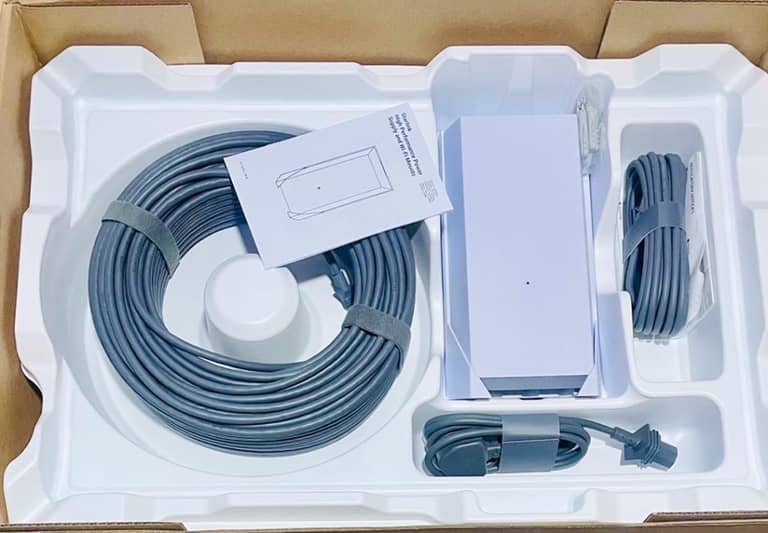
The Starlink Standard Kit reference supplied on 9 October 2026 is ₦690,000, plus a monthly subscription from ₦57,000. That reference is Starlink's equipment figure as supplied to DataGram, not a DataGram selling price, and it was not re-read from checkout on that date. It is not a small commitment for a household or a small business. Whether it is worth it depends on who you are, where you are, what the connection has to do, and whether that address is being offered the plan. This is a direct breakdown rather than a sales pitch — including the cases where we tell people not to buy.
A kit in stock does not create a residential slot. Where the screen shows Priority only, or a deposit or a wait step, read the capacity article before you treat the hardware figure as the whole decision. That article does not say Lagos, Abuja, or Port Harcourt is sold out city-wide.
What you are actually paying for
Hardware is a one-time Starlink equipment reference of ₦690,000 for the Standard Kit. That covers the dish, router, cables and the mounting bracket in the box. The Starlink Mini reference is ₦400,000 — lighter, lower power draw, lower throughput, and best treated as a portable or backup terminal rather than the primary link for a full household. Subscription, labour, and project figures in this article are unchanged.
The subscription is the recurring number that matters more over time: ₦57,000–₦75,000 per month on residential, or ₦159,000 per month on the Priority Plan. Where a Lagos, Abuja, or Port Harcourt address is offered Priority rather than residential, the Priority figure is the one on that screen. It is not a standing monthly price for every new subscriber in those cities — see our Priority Plan page for what that tier includes.
Professional installation is a third line item and varies by location and complexity — a bungalow with a short cable run is not the same job as a fourth-floor parapet mount with estate conduit requirements. DataGram quotes a fixed price per job after survey rather than publishing one number that would be wrong for most sites.
Earlier worked example, kept as published and not recalculated: hardware then shown at ₦669,000 plus twelve months at ₦57,000 was stated as ₦1,353,000 in year one, before installation. The 24-month view in that illustration — ₦669,000 plus ₦1,368,000 in subscription — was roughly ₦85,000 per month across two years. Those totals are not the sum of the 9 October 2026 kit references. From month 25 of that illustration you are paying subscription only, because the hardware is already yours. Current kit references and the unchanged subscription bands are on the price guide.
Who it is clearly worth it for
Remote workers and freelancers
If your income depends on a stable connection for client calls, file uploads or cloud tools, the arithmetic is not really about ₦57,000. One missed deadline or one call dropped mid-pitch costs more than a month of subscription. Freelancers billing in dollars usually reach this conclusion within a week of their first outage on a cheaper connection.
Small and medium businesses
A business that loses transactions, customer calls or POS connectivity during an outage is already paying a much higher price than ₦57,000–₦159,000 a month to avoid it. Work out what an hour offline costs you in your busiest period and the decision usually makes itself. Offices with more than a handful of staff should scope the network alongside the link — our enterprise deployment service handles VLANs, failover and multi-site rollouts.
Residential users where fibre does not reach
If IPNX, CSquared or Spectranet do not run down your street, Starlink is not competing against a cheaper wired option — it is competing against mobile data bundles that cost more per gigabyte and deliver less stability. Households that were spending ₦40,000 a month on data and still rationing video calls tend to find Starlink better value than the sticker suggests. Our home installation service covers estates, compounds and remote properties nationwide.
Maritime and offshore operators
For a working vessel there is no comparison to make. The monthly cost of a maritime plan is a fraction of what a single lost operational day costs, and the alternative is legacy VSAT at higher cost and 600ms latency. Offshore and maritime installation is the specification conversation, not a price conversation.
Who should think carefully before buying
Urban residents with reliable fibre already in place. If IPNX or a similar provider is delivering good speeds at around ₦30,000 a month and your street rarely gets cut, Starlink's premium is hard to justify for home use alone. Keep it in mind as a second WAN path rather than a replacement.
Light internet users. If your usage is mostly WhatsApp, social media and occasional YouTube, mobile data bundles are cheaper and genuinely sufficient. Buying a ₦690,000 terminal to browse Instagram is spending capital to solve a problem you do not have.
Anyone who cannot absorb the hardware cost as a capital expense. The monthly savings against your current internet spend rarely justify financing the kit on credit. If the ₦690,000 has to go on a loan, the interest usually eats the benefit — wait and buy it outright.
The constellation is above 11,000 satellites
Public satellite catalogues checked in October 2026 show more than 11,000 Starlink satellites in orbit. Tracker totals differ slightly, and they are not a SpaceX press release for a named launch. Nigeria sits under a denser grid than in earlier years. That is a coverage fact about the constellation, not a promise that a particular address has residential capacity again.
Latency in Nigerian urban areas is often discussed in an indicative band around 20–33 ms when the sky view is clean and Wi-Fi is not the bottleneck. That is not a measured guarantee from DataGram, and it is not a result you can book. Rural and South-South links vary with obstruction, weather, and plan class.
Buying now means entering the network at a strong quality point. It also means entering before subscriber density in your cell creates the kind of congestion that has already paused residential signups in Lagos and Abuja.
The DataGram difference — installation matters
A poorly installed dish loses a large share of its potential throughput — commonly 30–40% — through a suboptimal sky view, an incorrect mounting angle, or cable runs left in direct sun to degrade. The hardware is not underperforming in those cases; the installation is.
Our site survey identifies the mounting position with the lowest obstruction score, eliminates the obstructions that can be cleared with mast height, and configures the router and Wi-Fi for the specific building before the team leaves. We test at the desks people work from, not beside the router.
Hardware is one cost. Installation determines whether you actually receive what you paid for — which is the whole point of asking whether ₦690,000 is worth it. Labour and project bands are unchanged; the installation-cost guide separates them from the kit.