
Communities
Starlink for Communities in Nigeria: How Shared Access Works
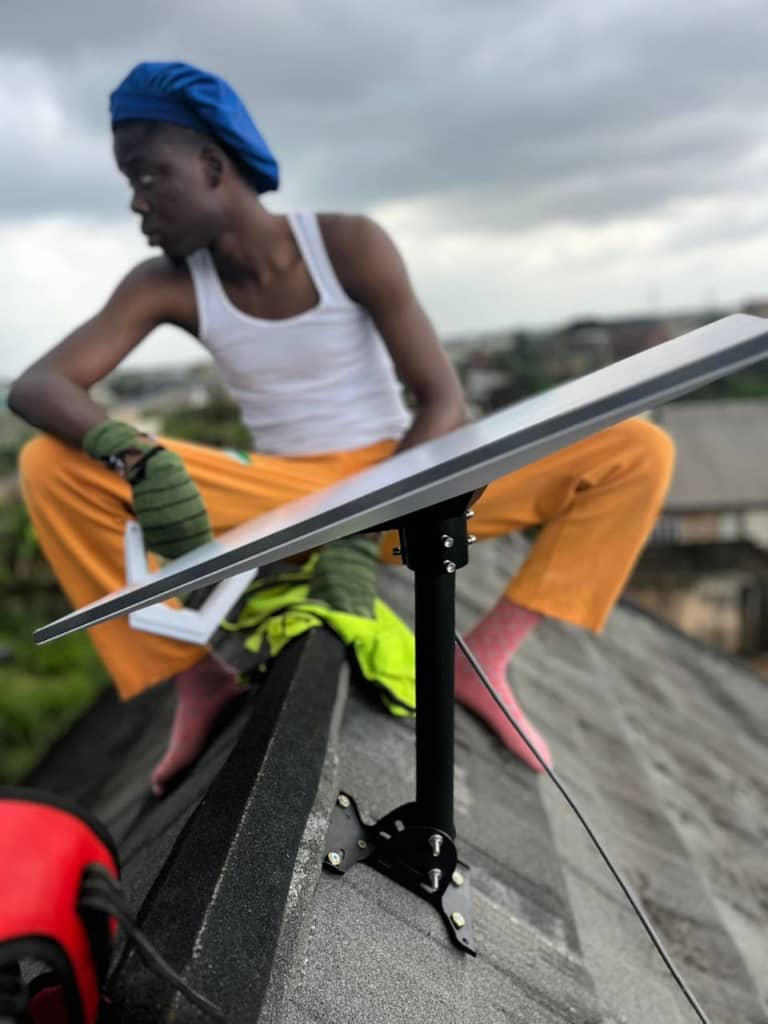
Starlink for Communities is a shared-access model: one kit at a host site, and nearby people buy a pass for a period of time instead of each household owning a dish. It is not the same thing as buying a Standard Kit or a Mini for your own address. As of 9 October 2026, Nigerian availability, NCC approval, pass prices, and any launch date have not been confirmed. Do not budget or advertise a Nigerian community service from a headline alone.
Starlink's own community host page did not return readable text to a normal fetch on 9 October 2026, because the page requires JavaScript. The description below follows contemporaneous reports of that page by Broadband Breakfast (6 October 2026) and Telecompetitor (2 October 2026). Where those reports stop, this article stops.
What a Community Host actually does
The reported model is a beta waitlist, not a finished national product. A host proposes a place where one Starlink kit could serve several nearby users. The examples named in that coverage include apartment buildings, campgrounds, rural communities, venues, and small businesses. The host orders the kit, provides power, and looks after the site. Starlink is described as handling payments, who is allowed on, and the connection itself.
Coverage can be extended with more routers or more kits. That is a Wi-Fi and mounting problem, the same class of work as an estate Wi-Fi distribution job. It does not, by itself, create a licence to resell internet outside Starlink's own scheme.
How the access passes are described
The reports of Starlink's page list four pass lengths. An hour pass, a day pass, and a week pass are each described as covering one device. A month pass is described as covering up to four devices. No pass price, and no host payout or revenue share, was published in those reports. This page does not invent either number.
A pass is time on someone else's terminal. It is not a residential subscription in your name, and it is not hardware you can move to another town. If the host site loses power, or the dish is obstructed, every pass holder on that site feels it. Owning a kit at your own address is a different risk: you control the mount, the account, and the plan, and you pay the kit and the monthly plan yourself. Current client-supplied Starlink equipment references, which are not Community prices, are on the Nigeria price guide.
What Nigeria cannot assume yet
Nothing checked for this article confirms that Community Host is open in Nigeria, that the NCC has approved it, or that a Nigerian launch month exists. One African report on 5 October 2026 described a host application form that listed Kenya among its countries. That is not a Nigeria approval, and it is not a reason to treat informal resale in Nigeria as authorised.
Starlink's ordinary terms in other markets have long restricted reselling a residential service without permission. A host inside Starlink's own programme would be selling with Starlink taking the payment. Someone who shares a neighbour's dish outside that programme is in a different position. DataGram does not advise that arrangement. If you need a lawful shared network on a site you control, start with a survey, not a pass you saw on social media.
What this could mean for estates, schools, and rural towns
An estate or block of flats is the clearest local picture. One terminal on a roof with a clear sky, then cabling and access points so flats actually get a signal, is work DataGram already does. Community passes, if they are ever offered here, would be a billing layer on top of that kind of site. They would not remove the need for a mount, power that survives generator changeover, or a way to keep one flat from using the whole link.
A school or a clinic in a town with no fibre has the same physical problem: sky view, power, and where people sit. A pass model might later let a host recover some of the running cost from users. Until Starlink publishes Nigeria terms, the honest plan is still a surveyed terminal and a network designed for the building. The older village gateway article discusses shared rural access as an installation pattern. It is not a description of the October 2026 Community Host product.
This is not a conventional WISP
A wireless ISP builds its own distribution: towers or rooftop radios, customer equipment, and its own customer relationship. DataGram's WISP setup service is that kind of operator project. Community Host, as reported, is narrower. Starlink sells the passes, Starlink controls access, and the host runs the site. Treating a Community Host kit as a homemade WISP, or treating a WISP as if it were Starlink's pass product, mixes two authorisations.
If you operate a rural network and want satellite backhaul into your own system, say that plainly on a survey. If you are a landlord who wants one dish and fair Wi-Fi for the compound, the estate page is the right conversation. If you are waiting to sell hourly Starlink passes in Nigeria, wait for Starlink to say the programme is available here, and for the price and the approval to be in writing.
What to do this month
If your compound, school, or yard needs internet now, price a normal installation. Enter the service address on Starlink's site, then book a survey so the mount and the cable path are real. Community Host does not reopen a residential address that the site is not offering, and it does not replace a home installation or an enterprise deployment you already need.
If you are only watching the host programme, watch Starlink's community host page and any NCC notice. A WhatsApp broadcast of a pass price is not either of those.